Senior Care 101: How Assisted Living, Independent Living, and Nursing Homes Really Compare
@jeffreydiel455
Business Name: BeeHive Homes of Arrowhead Assisted Living
Address: 17202 N 69th Ave, Glendale, AZ 85308
Phone: (602) 717-1864
BeeHive Homes of Arrowhead Assisted Living
BeeHive Homes of Arrowhead Assisted Living care is ideal for those who value their independence but require help with some of the activities of daily living. Residents enjoy 24-hour support, private bedrooms with baths, medication monitoring, home-cooked meals, housekeeping and laundry services, social activities and outings, and daily physical and mental exercise opportunities. We offer full memory care services that accommodate the growing number of seniors affected by memory loss and dementia. Beehive Homes offers respite (short-term) care for your loved one should the need arise. At the BeeHive Homes of Arrowhead Assisted Living, we strive to provide the best care for our residents while maintaining their dignity and respect.
17202 N 69th Ave, Glendale, AZ 85308
Business Hours
Families rarely start researching senior care because they have extra time and curiosity. Most get here in crisis or near it. A fall, a medical facility stay, a wandering occurrence, or a sudden realization that the bills are not being paid. Then the vocabulary starts flying: independent living, assisted living, skilled nursing, memory care, respite care. All of it noises technical, yet the decisions are deeply personal.
I have sat at a lot of kitchen tables with adult children trying to understand those words. They bring spreadsheets, regret, old promises about "never ever putting mom in a home," and a fierce desire not to slip up. The truth is, there is no ideal setting. There are trade‑offs, and they look various for an increasingly independent 78‑year‑old than they provide for a frail 92‑year‑old with sophisticated dementia.
What follows is a practical guide to how independent living, assisted living, and nursing homes operate in real life, how respite care suits, and what tends to work best for different levels of requirement. The goal is not to sell you on a particular alternative, but to assist you see what these locations are really like when the sales brochures are put away.
What these terms really mean
The senior care industry uses shorthand that confuses families. It helps to strip it back to the basics.
Independent living is real estate with features customized for older grownups who are mainly self‑sufficient. Think of it as an apartment or home in a community where practically everyone is retired, meals and activities are offered, and somebody will check on you if you are missing out on at supper, but you manage your own personal care and medical needs.
Assisted living is for older grownups who can no longer securely manage all daily tasks alone, but do not need 24‑hour medical supervision. Staff assist with bathing, dressing, medications, and often movement. There is normally a nurse on website, but the setting feels residential, not clinical.
Nursing homes, also called proficient nursing facilities, offer the greatest level of healthcare outside a healthcare facility. Homeowners frequently have intricate medical conditions, require substantial assistance with day-to-day activities, or require rehabilitation after surgery or disease. The environment is more regulated, with certified nursing readily available around the clock.
Respite care is short‑term care in any of these settings, generally for a few days to a couple of weeks. It is developed to give family caregivers a break, test‑drive a neighborhood, or cover spaces throughout illness, travel, or home modifications.
Within those broad categories, quality and culture vary commonly. Two assisted living communities 3 miles apart can feel like completely different worlds. Local regulations also form what each kind of neighborhood is permitted to do, particularly around medical tasks.
Key distinctions at a glance
A narrative explanation assists, but in some cases you need a fast picture to orient you. The following contrast uses the normal design in numerous parts of the United States. Local guidelines, individual neighborhoods, and other nations can differ, so treat this as a working map, not a legal definition.
-
Independent living: Residents are self‑sufficient, with optional assistance from outdoors services. Focus on way of life, socialization, and convenience rather than medical care.
-
Assisted living: Residents need routine help with personal care or medications but do not need constant nursing oversight. Personnel assistance every day life, and the setting aims to seem like home.
-
Nursing home: Citizens have severe, continuous medical or practical needs. Certified nurses are present at all times, and medical care, rehab, and guidance are central.
-
Respite care: Short‑term stay, normally in assisted living or a nursing home. Supplies short-lived elderly care when family support is not readily available or needs relief.
This framework assists you match your relative's needs with the best level of senior care before you get lost in sales tours.
Independent living: Liberty with a security net
Independent living is frequently the first step out of a long‑time home. It works best for older adults who are still managing their own medications, finances, and individual care however are tired of home upkeep or are feeling too isolated.
From the resident's point of view, the appeal is straightforward. No more snow shoveling, roofing leaks, or fretting who will repair the hot water heater. Meals can be offered, though many residents still like to cook. There are neighbors in comparable life phases, and activities varying from book clubs to fitness classes. Transport to medical appointments is common.
The tricky part is that independent living is not a medical model. Staff are not anticipated to help with bathing, toileting, or hands‑on transfer support. They are not normally tracking blood sugars or blood pressures. If a resident begins to fall frequently, forgets to eat, or mismanages medications, the neighborhood will typically recommend employing in‑home caretakers or moving to assisted living.
Families often misjudge this. I have seen independent living houses filled with grab bars, walkers, and pill organizers, plus a resident who is plainly overwhelmed. On paper, they "live separately." In practice, their lifestyle is bad, and they are one damaged hip far from a forced move.
Independent living works well when:
- The older adult values personal privacy and control, and still handles everyday tasks reliably.
- There is some local support, whether from family or paid services, that can step in as requirements change.
- The individual is socially open sufficient to take advantage of neighborhood life, or a minimum of neutral toward it.
It can be a bad fit if solitude, medication confusion, or unsafe movement are currently significant problems. Moving to independent living because situation typically purchases just a short window before another move is needed.
Assisted living: Assistance for day-to-day life
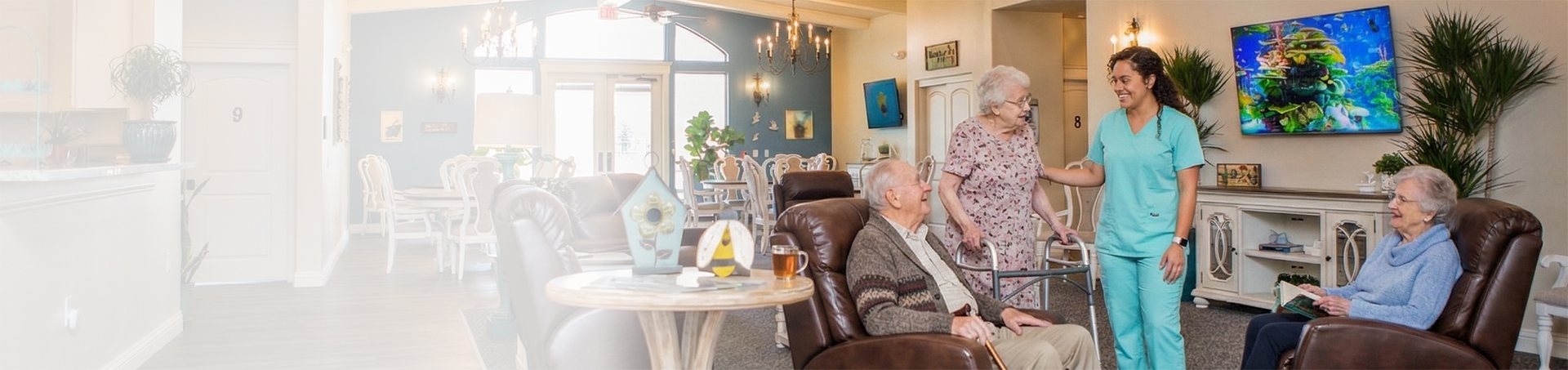
Assisted living beings in the middle of the senior care spectrum, and for numerous older grownups it is the sweet spot. The resident has their own house or suite. They bring their furnishings, pictures, and favorite chair. Meals, housekeeping, and laundry are managed. Personnel aid with individual care, and somebody is constantly close by.
At its finest, assisted living protects self-respect while quietly wrapping a net around the susceptible parts of day-to-day routine. A resident might require assistance stepping in and out of the shower but can wash their own hair. Or they can dress themselves if somebody sets out the clothes. Or they are mentally sharp however physically limited by Parkinson's or severe arthritis.
Medication management is frequently the single most important service. In lots of assisted living neighborhoods, staff store and administer medications, track refills, and collaborate with drug stores. For individuals handling blood pressure tablets, blood thinners, diabetes medications, and more, this is not a luxury. It prevents ER visits.
However, families in some cases expect assisted living to operate like a tiny health center. That is not sensible. Assisted living staff are trained in elderly care and individual assistance, but they are not staffed like an intense care unit.
Typical limits in assisted living include:
- Residents generally need to be clinically stable. Serious oxygen needs, unmanaged habits, or quickly changing conditions may need a higher level of care.
- Most neighborhoods can not provide constant one‑on‑one guidance, such as for a resident who attempts to stand and walk every few minutes despite severe fall risk.
- There are generally guidelines around lifting and transfers. If a resident requires 2 staff members to transfer safely, not every assisted living site can accommodate that.
From an expense viewpoint, assisted living is often private pay. Regular monthly costs vary extensively by region however can vary from the low thousands to well over 6 thousand dollars per month, depending upon home size and care level. Care charges are frequently tiered: as requirements increase, so do costs.
Families ought to look beyond the design. Observe how personnel speak with homeowners in the corridors and dining room. Ask how they manage falls, how frequently care strategies are reviewed, and what happens if the resident's requirements increase. Neighborhoods that answer these questions plainly and without deflecting supply a much better safety net over time.
Nursing homes: Treatment and long‑term support
Nursing homes inhabit a hard place in public imagination. Lots of older adults say, often securely, "I never want to wind up in a home." That fear is rooted in older designs of institutional care and in extremely genuine stories of poor‑quality facilities. It is also real that for some people, a great experienced nursing center is the best, most appropriate option.
Nursing homes offer 24‑hour nursing supervision, medication administration, wound care, feeding support, and rehab therapies such as physical, occupational, and speech therapy. Homeowners may be short‑term, recovering from joint replacement, stroke, or major infection. Or they may be long‑term, living there for several years with innovative dementia, extreme movement limitations, or intricate medical needs.
The environment is more medical. You will see med carts, lifts, treatment health clubs, and staff in scrubs. Regulations are stricter than in assisted living. There are care strategy meetings, routine physician oversight, and comprehensive paperwork requirements.
From a useful perspective, someone may require a nursing home if:
- They are bedbound or need overall support for movement and personal care.
- They have frequent or intricate medical interventions: feeding tubes, IV medications, advanced wound care, or complex respiratory support.
- Their cognitive or behavioral symptoms require structured supervision that assisted living can not safely provide.
One nuance numerous families learn the hard method: short‑term rehabilitation stays are often covered for a minimal time by insurance coverage or nationwide health systems after a qualifying medical facility stay, however long‑term custodial care (assist with bathing, dressing, toileting) is typically not covered the exact same way. Individuals run out of rehabilitation days or protection and transition to personal pay or public long‑term care programs. Comprehending this monetary shift early prevents worried decisions later.
Quality distinctions across nursing homes are stark. In some, call lights ring constantly, residents sit dropped in wheelchairs, and personnel turnover is constant. In others, personnel know homeowners by nickname, therapy is proactive, and households feel included. Visiting at different times of day, talking with families in the lobby, and asking staff how long they have worked there often informs you more than any ranking website.
Where respite care fits in
Respite care is one of the most underused tools in senior care. It is temporary residential care that gives family caretakers a break or bridges a shift. Respite can occur in assisted living, a nursing home, or sometimes specialized short‑stay units.
Typical situations:
A child looking after her father with mid‑stage dementia requires to travel for work for a week. She sets up a 10‑day respite remain in a memory‑capable assisted living community. Her father gets structured activities and supervision; she gets to do her task without constant worry.
A spouse caregiver is tired however feels guilty admitting it. A social worker recommends a two‑week respite in a skilled nursing facility. During that time, the partner has their own medical visits, catches up on sleep, and assesses whether home care remains realistic.
An older adult is released from the health center after pneumonia. They are still weak, and the family is not sure if they can manage at home securely. A short rehabilitation remain in a nursing home functions as respite and as a trial run. If strength returns, they can go back home or to independent living. If not, the family has more time to plan long‑term arrangements.
Respite care slots can be limited, particularly throughout peak times like holidays. They often need advance planning, updated medical information, and an assessment to validate the setting can satisfy the individual's requirements. For numerous households, however, respite is the pressure valve that prevents burnout or risky caregiving situations.
Daily life: What in fact changes from one setting to another
Brochures tend to highlight features. Homeowners and families care more about how the day unfolds.
In independent living, mornings depend almost totally on the resident's preferences. Some sleep late and drink coffee in their kitchen space. Others head directly to the dining-room. Personnel might sign in subtly, for example by noting who has not concern meals, however there is no expectation that homeowners follow a specific schedule.
In assisted assisted living arrowhead az BeeHive Homes of Arrowhead Assisted Living living, daily rhythms are shaped by care needs. Personnel produce schedules for bathing help, medication rounds, and housekeeping. A resident might receive help with showering two times weekly, medication administration 3 times per day, and assistance getting ready in the early morning and at bedtime. Activities are provided at set times, yet citizens still have liberty to choose whether to join.
In nursing homes, the structure is tighter. Medication administration, treatments, and treatment sessions follow medical routines. Meals happen on schedule, often with assigned seating in dining-room or delivered at the bedside. Flexibility is possible, especially in higher‑quality facilities, but life is more regulated simply because clinical jobs should be completed.
Families sometimes worry that structure equals loss of autonomy. In truth, for somebody living with significant disability, structure can feel supporting. The secret is whether staff technique regimens with respect and cooperation. "How would you like to begin your morning?" feels really different from "Time to get up, we have to get this done."
Safety, self-respect, and danger: Finding a practical balance
One of the hardest parts of senior care planning is balancing security with autonomy. Specialists in elderly care talk about "dignity of danger" - the idea that grownups deserve to choose that include some danger, as long as they comprehend and accept the consequences.
In practice, this looks various in each setting:
In independent living, the neighborhood might highly motivate fall prevention procedures, however residents can still decrease grab bars or select to use a rolling office chair instead of a stable dining chair. As long as they are able to make informed choices, their right to cope with danger is broad.
In assisted living, the lines are blurrier. Staff are responsible for resident safety, yet they are likewise anticipated to honor preferences. If a resident with a history of falls demands walking without a walker, the care team will likely include the family, record the discussion, and attempt to negotiate. They might arrange for physical therapy to assess gait or schedule supervised walks.
In nursing homes, security concerns bring a lot more weight because regulative analysis and liability risks are high. That does not eliminate resident rights, but it narrows the series of appropriate dangers. For example, a resident who gets rid of a fall alarm may still be allowed to do so, however staff should reveal that they evaluated cognition, informed the resident, and carried out alternative measures.
Families often lean greatly toward security, specifically after a scare. Older adults tend to lean toward independence, particularly if they currently feel their world diminishing. The healthiest choices generally originate from honest discussions where both viewpoints are called and respected, instead of hurried options made in the shadow of a crisis.
Money: How expenses and coverage truly work
Money shapes senior care choices more than a lot of households want to confess. It is uneasy to put a dollar sign next to quality of life, but ignoring costs does not make them disappear.
Independent living is generally private pay. Regular monthly fees differ based on location, size of system, and consisted of services. Energies, meals, housekeeping, and social programming are typically bundled. Medical insurance hardly ever covers this setting because it is considered real estate, not medical care.
Assisted living is also generally personal pay, with some regional exceptions for restricted public funding programs. Base rent covers the apartment or condo and fundamental services. Care charges are included based on an evaluation of requirements, like support with bathing, dressing, or medication management. As needs grow, month-to-month expenses often increase.
Nursing homes are more complicated. Short‑term knowledgeable rehabilitation after a healthcare facility stay might be partly or fully covered for a defined period, if particular criteria are satisfied. Long‑term house for custodial care is various. Coverage depends greatly on country and local policies, but lots of people either pay privately till they qualify for public long‑term care programs, or they rely on a mix of private funds and public aids from the start.

Respite care can be private pay or subsidized by caretaker support programs, long‑term care insurance, or regional social services. Protection guidelines differ extensively. Numerous households presume respite is covered, just to learn that benefits are limited or require preauthorization.
A frank early discussion with a monetary planner, elder law attorney, or social employee who understands regional benefits conserves heartbreak later on. Good planning thinks about not just regular monthly costs, but also what takes place if the older adult lives longer than anticipated, ends up being widowed, or requires to move to a greater level of care.
How health changes push the requirement to step up care
People seldom move directly from independent living to a nursing home without something altering. Patterns typically emerge.
For example, memory decrease starts as small lapses: misplaced keys, a missed out on appointment. Then costs accumulate, home appliances are left on, driving ends up being doubtful. Initially, in‑home assistance can compensate. With time, the threat of leaving the stove on or roaming during the night may make assisted living with memory care a better option.
Mobility issues follow another path. An individual with arthritis might walk more gradually, however safely, for many years. Include a stroke or a hip fracture, and suddenly transfers, toileting, and bathing need 2 individuals and unique equipment. At that point, assisted living might no longer have the ability to satisfy transfer needs, and a nursing home ends up being the much safer choice.
Chronic illness can tip the balance too. Somebody with cardiac arrest and diabetes may manage well in independent or assisted living for a very long time with excellent outpatient care. Numerous hospitalizations in a year, worsening shortness of breath, or repeated medication changes might indicate that closer medical oversight is required.
Families frequently feel guilty when health modifications require a relocation. They see it as a failure to honor guarantees or to "keep mom in your home." A more accurate frame is that the individual's requirements evolved, and the care environment required to develop with them. That is not a damaged promise. It is responsible adaptation.
Questions to ask when you tour a community
When you walk into a senior community, it is simple to be swayed by chandeliers or, on the other side, by a faint disinfectant odor. Particular concerns grounded in how care works will tell you far more.
-
What happens if my member of the family's needs increase? Can they remain here, or would they need to move?
-
How do you manage falls, medical emergencies, and healthcare facility transfers throughout nights and weekends?
-
Who offers medications, how are modifications interacted, and how do you reduce errors?
-
How do you determine and respond to isolation, isolation, or anxiety among residents?
-
Can you explain a current challenging circumstance with a resident and how your group resolved it?
Ask staff for concrete examples and listen carefully to how they talk about citizens. Do they utilize respectful language? Do they know residents' stories? Do they describe families as partners or as obstacles?
After the tour, trust your quieter impressions too. How did residents look and sound? Did personnel seem hurried or present? Did anybody talk directly to the older adult you are supporting, or did they only attend to you?
Matching the person to the place
Choosing among independent living, assisted living, nursing homes, and respite care is less about labels and more about fit.
A 79‑year‑old retired teacher who still drives, volunteers, and manages her own medications may flourish in independent living, gaining good friends and dropping the problems of home ownership. A 90‑year‑old widower with mild dementia, unsteady walking, and weight-loss may restore stability in assisted living, with constant meals, social contact, and cueing for health and medications. A 75‑year‑old stroke survivor who is disabled on one side and has a feeding tube will likely be safest in a nursing home with round‑the‑clock nursing and rehabilitation.
Senior care decisions work best when they begin early, before a disastrous occasion. Even one exploratory tour of a neighborhood before it is urgently required changes the tone later. The older adult has a chance to say, "I liked that location with the garden," or "I will never ever live someplace that smells like bleach," and those choices can guide the family when crisis comes.
No setting can remove the vulnerabilities that age and health problem bring. The real goal is more modest and more significant: select a location that supports as much independence as is safely possible, protects from avoidable damage, and permits the older adult to stay an individual with a history and a voice, not simply a list of diagnoses and tasks.
Independent living, assisted living, nursing homes, and respite care are tools. Used thoughtfully, each can supply comfort, security, and dignity at various points along the aging journey. The obstacle is not to pick the perfect tool at last, but to keep adjusting the fit as life unfolds.
BeeHive Homes of Arrowhead Assisted Living provides assisted living care
BeeHive Homes of Arrowhead Assisted Living provides memory care services
BeeHive Homes of Arrowhead Assisted Living provides respite care services
BeeHive Homes of Arrowhead Assisted Living supports assistance with bathing and grooming
BeeHive Homes of Arrowhead Assisted Living offers private bedrooms with private bathrooms
BeeHive Homes of Arrowhead Assisted Living provides medication monitoring and documentation
BeeHive Homes of Arrowhead Assisted Living serves dietitian-approved meals
BeeHive Homes of Arrowhead Assisted Living provides housekeeping services
BeeHive Homes of Arrowhead Assisted Living provides laundry services
BeeHive Homes of Arrowhead Assisted Living offers community dining and social engagement activities
BeeHive Homes of Arrowhead Assisted Living features life enrichment activities
BeeHive Homes of Arrowhead Assisted Living supports personal care assistance during meals and daily routines
BeeHive Homes of Arrowhead Assisted Living promotes frequent physical and mental exercise opportunities
BeeHive Homes of Arrowhead Assisted Living provides a home-like residential environment
BeeHive Homes of Arrowhead Assisted Living creates customized care plans as residents’ needs change
BeeHive Homes of Arrowhead Assisted Living assesses individual resident care needs
BeeHive Homes of Arrowhead Assisted Living accepts private pay and long-term care insurance
BeeHive Homes of Arrowhead Assisted Living assists qualified veterans with Aid and Attendance benefits
BeeHive Homes of Arrowhead Assisted Living encourages meaningful resident-to-staff relationships
BeeHive Homes of Arrowhead Assisted Living delivers compassionate, attentive senior care focused on dignity and comfort
BeeHive Homes of Arrowhead Assisted Living has a phone number of (602) 717-1864
BeeHive Homes of Arrowhead Assisted Living has an address of 17202 N 69th Ave, Glendale, AZ 85308
BeeHive Homes of Arrowhead Assisted Living has a website https://beehivehomes.com/locations/arrowhead
BeeHive Homes of Arrowhead Assisted Living has Google Maps listing https://maps.app.goo.gl/D7JvVkn2P8RDaFQS7
BeeHive Homes of Arrowhead Assisted Living has Facebook page https://www.facebook.com/BeeHiveArrowhead
BeeHive Homes of Arrowhead Assisted Living won Top Assisted Living Homes 2025
BeeHive Homes of Arrowhead Assisted Living earned Best Customer Service Award 2024
BeeHive Homes of Arrowhead Assisted Living placed 1st for New Mexico Senior Living Communities 2025
People Also Ask about BeeHive Homes of Arrowhead Assisted Living
What is BeeHive Homes of Arrowhead Assisted Living Living monthly room rate?
Our monthly rate is based on an individual care assessment that determines the level of support your loved one needs. We use an all-inclusive pricing model, which means no hidden costs, no surprise fees, and no confusing tier add-ons. Contact us to schedule a complimentary assessment and personalized quote
Can residents stay in BeeHive Homes of Arrowhead Assisted Living until the end of their life?
In most cases, yes. We are committed to caring for our residents through their journey. Exceptions may arise if a resident requires 24-hour skilled nursing services or presents safety concerns that exceed what our home can accommodate. We work closely with families and healthcare providers to ensure smooth, compassionate transitions whenever they are needed
Do we have a nurse on staff?
Our home has a consulting nurse available 24/7. If nursing services are needed, a physician can order home health care to be provided directly in the home. Our trained caregiving staff is on-site around the clock for daily support, medication management, and emergency response
What are BeeHive Homes of Arrowhead Assisted Living's visiting hours?
We welcome family visits and work to accommodate schedules flexibly. We simply ask that visits happen at reasonable hours so our residents can maintain healthy daily routines. We believe family connection is essential, and we never want policies to get in the way of that
Do we have couple’s rooms available?
Yes. We have rooms designed for couples who want to stay together. Availability varies, so we encourage you to ask early during the tour and assessment process
Where is BeeHive Homes of Arrowhead Assisted Living located?
BeeHive Homes of Arrowhead Assisted Living is conveniently located at 17202 N 69th Ave, Glendale, AZ 85308. You can easily find directions on Google Maps or call at (602) 717-1864 Monday through Sunday 7:00am to 7:00pm
How can I contact BeeHive Homes of Arrowhead Assisted Living?
You can contact BeeHive Homes of Arrowhead Assisted Living by phone at: (602) 717-1864, visit their website at https://beehivehomes.com/locations/arrowhead or connect on social media via Facebook
Haus Murphy's provides a welcoming local dining experience that assisted living and memory care residents can enjoy during senior care and respite care visits.